CSS Pakistan Affairs | Nexus between Pakistan’s Education Emergency and Its Economic Crises
The following assignment question for CSS Pakistan Affairs is solved by Amna Aamir under the supervision of Howfiv’s Pakistan Affairs and Current Affairs Coaches: Miss Iqra Ali and Sir Ammar Hashmi. She learnt how to attempt 20 marks question and essay writing from Sir Syed Kazim Ali, Pakistan’s best CSS and PMS English essay and precis teacher with the highest success rate of his students. This solved question is attempted on the pattern taught by Sir to his students, scoring the highest marks in compulsory and optional subjects for years.

Outline
1-Introduction
2-Analyzing the Nexus between Pakistan’s “Education Emergency” and Its Recurring Economic Crises
3-How the Human Capital Deficit Enforces a Low-Complexity Economy
- ✓Collapsing Education Investment against Global Benchmarks
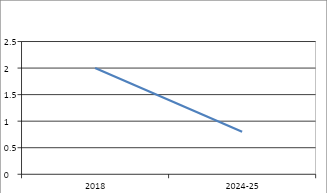
- Evidence: Pakistan’s combined federal-provincial education expenditure fell to 0.8% of GDP in the Economic Survey of Pakistan 2024–25, down consistently from 2% in 2018, moving further away from the UNESCO benchmark of 4.0%–6.0%.
- ✓Learning Poverty as the Root of a Low-Skill Labor Force
- Evidence: World Bank data shows roughly 4 in 5 (75%–80%) of Pakistan’s 10-year-olds are unable to read and comprehend a simple age-appropriate text, significantly worse than the South Asian regional average.
- ✓Weak Innovation Capability on Global Rankings
- Evidence: Pakistan ranks 99th among 139 economies in the Global Innovation Index 2025, performing substantially worse in innovation inputs (124th) than innovation outputs (75th), proving a severe human capability shortfall.
- ✓Export-Basket Concentration in Low-Value Goods
- Evidence: Over 60% of merchandise exports remain locked in low-tech textiles, raw cotton, leather, and basic agricultural commodities, limiting foreign exchange earnings.
4-How the Low Economic Complexity Reinforces External Debt Dependency
- ✓The Trade Deficit Trap
- Evidence: Low-complexity exports are failing to cover the cost of essential high-tech and energy imports, with the merchandise trade deficit widening to $39.47 billion in FY2025–26 (Pakistan Bureau of Statistics) as exports fell nearly 6% against a 7.9% rise in imports.
- ✓A Narrow Tax Base Limiting Domestic Fiscal Capacity
- Evidence: Pakistan’s Tax-to-GDP ratio stood at 10.5% in 2023 and 10.3% in FY2024–25, far below the Asia-Pacific average of 19.5%, a direct consequence of a low-skill, largely informal workforce that cannot be effectively taxed.
- ✓Recurring Economic Crises Forcing External Financing
- Evidence: Total external debt liabilities (~$134.5 billion) and public debt (>70% of GDP) are escalating as foreign borrowing plugs the structural trade gap.
- ✓The Fiscal Crowding-Out Effect
- Evidence: Debt servicing consumed ~70% of tax revenue in FY2025 (Rs.8.89 trillion spent on debt service vs. Rs.2.97 trillion on total development/net lending), structurally crowding out human capital allocations.
5-Strategic Way Forward to Upgrade Human Capital to Break the Debt Trap
- ✓To Enforce Statutory Fiscal Commitments
- Evidence: Strengthening Article 25-A through a legal way of allocating a minimum of 4.0% of GDP for public education.
- ✓To Modernize TVET and Higher Education
- Evidence: Aligning technical training and tertiary curricula toward high-value sectors including software engineering, IT services, renewable energy, and precision agriculture.
6-Conclusion
Answer to the Question
Introduction
Pakistan’s repeated economic crises are not merely short-term stabilization failures, but the structural consequence of a chronic human capital deficit. For decades, the nation has operated under an “education emergency,” allocating minimal resources toward foundational literacy, technical training, and institutional research. This persistent underinvestment in human capital restricts workforce productivity, locking the domestic market into low-complexity manufacturing and raw commodity production. Because a low-skilled labor force cannot produce high-value goods, national export earnings remain capped, while domestic reliance on imported technology, fuel, and capital equipment continues to rise. Furthermore, this structural asymmetry drives chronic balance-of-payments deficits, leaving the state reliant on external loans, bilateral bailouts, and International Monetary Fund stabilization programs to satisfy basic financial commitments. Moreover, as mounting debt servicing consumes the majority of federal tax receipts, public investment in primary education is continuously crowded out, reinforcing a destructive economic loop. Ultimately, Pakistan cannot achieve fiscal autonomy or escape external debt dependency without prioritizing human capital development as the core engine of economic complexity. The structural link between Pakistan’s educational neglect and its macroeconomic distress becomes visible through a systematic examination of skill deficits, export limits, tax base constraints, and debt servicing dynamics.
Analyzing the Nexus between Pakistan’s “Education Emergency” and Its Recurring Economic Crises
To contextualize the direct relationship between human capital deficits and macroeconomic distress, it is essential to trace how educational neglect translates into structural economic volatility. When a state systematically starves its primary and technical learning systems, it severely caps the baseline productivity and technological absorption capacity of its labor force. This productivity ceiling prevents domestic industry from transitioning out of low-yield agricultural output and low-margin commodities into high-value manufacturing and technology sectors. Consequently, national output remains structurally uncompetitive in international markets, failing to generate foreign exchange while domestic demand for complex imported goods continues to surge. This structural imbalance generates recurring balance-of-payments crises, forcing successive governments into foreign debt accumulation to meet immediate financial obligations. The resulting debt-servicing burden subsequently consumes the vast majority of tax revenues, stripping fiscal allocations away from primary education and technical institutions. Thus, the education emergency acts as the foundational engine of economic instability, establishing a continuous feedback loop where human capital deficits create debt traps, and debt traps, in turn, guarantee the perpetual underfunding of human capital.
Proving How the Human Capital Deficit Enforces a Low-Complexity Economy
- Collapsing Education Investment against Global Benchmarks
To begin with, public investment in basic learning has collapsed far below international benchmarks, crippling the foundational productivity of Pakistan’s labor market. Decades of fiscal retrenchment have stripped state-run schools of essential infrastructure, instructional materials, and qualified teachers. According to the Economic Survey of Pakistan 2024–25, combined federal and provincial education expenditure fell to 0.8% of GDP, marking a steady decline from 2% in 2018 and moving further away from the UNESCO benchmark of 4.0% to 6.0%. This severe contraction in state spending ensures that millions of entering workers lack basic numerical and operational literacy needed for industrial work. Consequently, state factories and agricultural units operate at lower efficiency levels compared to regional competitors, limiting aggregate output. Therefore, continuous budgetary abandonment of public schooling directly starves national industries of high-productivity human capital.
- Learning Poverty as the Root of a Low-Skill Labor Force
Furthermore, widespread foundational learning deficits prevent the broader labor force from acquiring advanced technical and vocational capabilities. Severe cognitive shortfalls in early childhood restrict an individual’s capacity to master complex software, precision machinery, or managerial tasks later in life. World Bank data shows that roughly 4 in 5 (75% to 80%) of Pakistan’s 10-year-olds are unable to read and comprehend a simple age-appropriate text, performing significantly worse than the South Asian regional average. Because the majority of children fail to acquire basic functional literacy during their formative years, domestic industries face a severe shortage of trainable personnel. As a result, industrial firms remain confined to basic assembly lines and low-margin processing operations that require minimal skill. Ultimately, unaddressed learning poverty permanently anchors the domestic labor pool in low-value economic activities.
- Weak Innovation Capability on Global Rankings
Simultaneously, underfunded academic and research environments prevent domestic industries from developing proprietary technologies or modernizing production workflows. Without functional laboratory infrastructure and strong public-private research partnerships, local firms cannot generate patents or design advanced manufacturing methods. For instance, Pakistan ranks 99th among 139 economies in the Global Innovation Index 2025, performing substantially worse in innovation inputs (124th) than innovation outputs (75th), proving a severe human capability shortfall. This massive gap between inputs and outputs highlights how the lack of qualified researchers, technical equipment, and institutional funding blocks local technological development. Consequently, local manufacturers must rely on imported machinery, licenses, and technical expertise to maintain routine operations. Therefore, severe deficits in domestic research capacity keep the industrial base technologically dependent on foreign suppliers.
- Export-Basket Concentration in Low-Value Goods
Moreover, the absence of specialized technical skills confines Pakistan’s export profile to raw commodities and low-margin merchandise. A nation’s capacity to produce complex, high-margin exports relies directly on the technical sophistication and specialized knowledge of its workforce. For example, over 60% of merchandise exports remain locked in low-tech textiles, raw cotton, leather, and basic agricultural commodities, limiting foreign exchange earnings. Because the domestic labor force lacks specialized engineering, chemical, and software capabilities, national production cannot move into high-value sectors such as microelectronics or industrial machinery. These raw and low-tech exports yield slim profit margins and face volatile pricing in international markets. Consequently, an uncompetitive skill base creates a structural ceiling on export receipts, preventing the nation from earning sufficient foreign currency.
Proving Low Economic Complexity as the Engine of External Debt Dependency
- The Trade Deficit Trap
In tandem with stagnant export earnings, a low-complexity economy generates expanding trade deficits because low-value exports cannot offset the high cost of essential imports. An economy limited to basic commodities must import virtually all of its industrial equipment, refined fuels, pharmaceuticals, and modern electronics. Official trade statistics from the Pakistan Bureau of Statistics show the merchandise trade deficit widened to $39.47 billion in FY2025–26, as total exports fell nearly 6% to $30.13 billion against a 7.9% rise in imports to $69.60 billion. This widening trade gap confirms that low-margin exports fail to generate the foreign currency required to cover essential national import expenditures. To bridge this structural shortfall and satisfy international payment obligations, state authorities must repeatedly borrow foreign currency. Consequently, low economic complexity creates a permanent foreign exchange deficit that drives the state into external debt.
- A Narrow Tax Base Limiting Domestic Fiscal Capacity
Crucially, a low-skill, low-complexity economic structure severely restricts the state’s capacity to collect direct internal revenues. Low workforce productivity keeps average income levels low and drives the majority of employment into informal, unregulated sectors that fall outside the formal tax net. For instance, Pakistan’s Tax-to-GDP ratio stood at 10.5% in 2023 and 10.3% in FY2024–25, far below the Asia-Pacific average of 19.5%, a direct consequence of a low-skill, largely informal workforce that cannot be effectively taxed. Because the government cannot extract adequate revenue from low-income informal enterprises, it relies heavily on regressive indirect taxes that burden general consumption without filling the fiscal deficit. This persistent structural shortfall between public revenues and state expenditures forces the government to finance routine administrative costs through borrowing. Thus, a low-skilled labor market directly undermines domestic fiscal self-sufficiency.
- Recurring Economic Crises Forcing External Financing
Consequently, structural trade deficits and weak domestic tax collection combine to force the state into continuous foreign debt accumulation. When foreign currency reserves deplete to critical levels, state authorities must secure short-term emergency loans from foreign lenders to avoid sovereign default. For example, total external debt liabilities reaching approximately $134.5 billion and public debt exceeding 70% of GDP escalate as foreign borrowing plugs the structural trade gap. Because these borrowed funds are spent primarily on short-term balance-of-payments relief rather than productive infrastructure or human capital development, they generate no future export revenues. As these foreign loans reach maturity, the state must secure new borrowing simply to service incoming debt installments. Ultimately, uncompetitive economic structures transform short-term illiquidity into a long-term sovereign debt cycle.
- The Fiscal Crowding-Out Effect
Moving forward, high debt accumulation creates an overwhelming debt-servicing burden that systematically starves public investments in human capital, closing the negative feedback loop. When the state must commit the vast majority of its revenue to interest payments, funding for social infrastructure and public education is severely cut. Debt servicing consumed roughly 70% of tax revenue in FY2025, with Rs. 8.89 trillion spent on debt service against just Rs. 2.97 trillion spent on total development and net lending, structurally crowding out human capital allocations. This severe fiscal distortion deprives primary schools, vocational centers, and public hospitals of operational funds. As public education is starved to settle past debt obligations, future generations enter the market with low skill levels, ensuring national productivity remains low. Thus, heavy debt servicing directly deprives the nation of the resources needed to break the education emergency.
Strategic Way Forward to Upgrade Human Capital to Break the Debt Trap
- To Enforce Statutory Fiscal Commitments
Consequently, Parliament must enact legislation that ring-fences a protected floor for public education expenditure. For decades, discretionary budgetary cuts have targeted social sectors whenever debt obligations surge, starving primary schools of foundational funding. Strengthening Article 25-A of the Constitution through a statutory legislative mechanism must mandate a legal floor allocating a minimum of 4.0% of GDP for public education across federal and provincial budgets. This statutory guarantee will protect foundational literacy programs, school infrastructure, and teacher training from emergency fiscal retrenchment. Securing long-term budgetary support ensures that early childhood learning poverty drops significantly, building a productive workforce capable of supporting modern industrial enterprise. Consequently, establishing a statutory spending floor provides the financial foundation required to break the human capital deficit.
- To Modernize TVET and Higher Education
Last but not least, the state must realign vocational training curricula directly with high-value export industries. Existing technical institutes operate with outdated curricula that produce low-skilled workers incapable of managing advanced production systems. Aligning technical training and higher education institutions requires aligning curricula toward high-growth sectors, including software engineering, IT services, renewable energy manufacturing, and precision agriculture. Establishing public-private partnerships between universities, the National Vocational and Technical Training Commission (NAVTTC), and industrial associations will ensure training programs meet contemporary international market standards. Upgrading technical skill sets allows domestic firms to transition from basic assembly into high-value technological manufacturing. Ultimately, building a sophisticated labor force expands high-complexity exports, generating the foreign exchange needed to break external debt dependency.
Conclusion
In a nutshell, Pakistan’s recurring economic crises and external debt traps are the direct consequences of its long-standing “education emergency.” Skimping on human capital spending has produced a low-skill labor force, locking the national economy into low-complexity exports and a narrow domestic tax base. This structural weakness generates chronic balance-of-payments deficits, leaving the country dependent on foreign loans to satisfy basic financial obligations. In turn, high debt servicing costs starve public education of funding, reinforcing the cycle of low skill and foreign debt. Escaping this trap requires establishing a protected legal floor for education spending and realigning technical training with modern high-value industries. Without prioritizing human capital development, Pakistan cannot achieve lasting fiscal stability or secure long-term economic sovereignty.

CSS Solved Past Papers’ Essays
Looking for the last ten years of CSS and PMS Solved Essays and want to know how Sir Kazim’s students write and score the highest marks in the essays’ papers? Then, click on the CSS Solved Essays to start reading them.
CSS Solved Essays
CSS Solved Islamiyat Past Papers
Want to read the last ten years’ Islamiyat Solved Past Papers to learn how to attempt them and to score high? Let’s click on the link below to read them all freely. All past papers have been solved by Pakistan’s top CSS Islamiyat coaches having the highest score of their students.
CSS Solved Islamiyat
CSS Solved General Science & Ability Past Papers
Want to read the last ten years’ General Science & Ability Solved Past Papers to learn how to attempt them and to score high? Let’s click on the link below to read them all freely. All past papers have been solved by Pakistan’s top CSS GSA coachez having the highest score of their students.
CSS Solved General Science & Ability
CSS Solved Pakistan Affairs Past Papers
Want to read the last fifteen years’ Pakistan Affairs Solved Past Papers to learn how to attempt them and to score high? Let’s click on the link below to read them all freely. All past papers have been solved by Pakistan’s top CSS Pakistan Affairs coaches having the highest score of their students.
CSS Solved Pakistan Affairs
CSS Solved Current Affairs Past Papers
Want to read the last fifteen years’ Current Affairs Solved Past Papers to learn how to attempt them and to score high? Let’s click on the link below to read them all freely. All past papers have been solved by Pakistan’s top CSS Current Affairs coaches having the highest score of their students.
CSS Solved Current Affairs