CSS/PMS Political Science | Constructivism: The Power of Ideas in Shaping Politics
Constructivism views ideas, norms, and identities as key forces shaping political behavior and international relations; consequently, in CSS and PMS Political Science, it helps explain how shared beliefs influence state actions and global politics.

Introduction
Constructivism represents a sophisticated shift in the understanding of human cognition and social reality, moving away from the notion of knowledge as a discovered entity toward knowledge as a created one. Within academic discourse, this theory posits that individuals and societies do not merely record information from an external world but actively synthesize it through existing mental frameworks and social interactions. By prioritizing the internal processes of the mind and the collaborative nature of human culture, constructivism provides a robust framework for explaining how meaning is derived from experience.
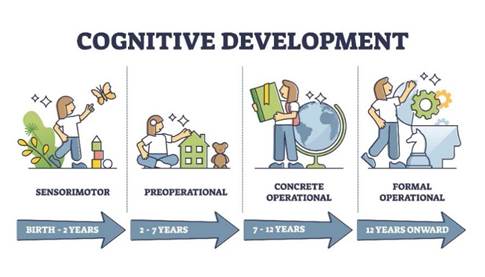
Source: Google
Formal Definition of Constructivism
Constructivism is defined as a philosophical and psychological theory asserting that humans generate knowledge and meaning from an interaction between their experiences and their ideas.
According to Nicholas Onuf (who coined the term)
“People and societies construct, or constitute, each other.”
Likewise,Alexander Wendt says:
“Anarchy is what states make of it.”
In a simplistic term, through constructivism, a person remains an active builder, instead of being a passive observer who just listens and remembers. Accordingly, one creates a personal version of reality based on past experiences, social interactions, and active doing, ensuring that truth is often a product of individual or collective interpretation rather than a static, objective certainty.
The Meaning and Nuance of Constructive Thought
The underlying meaning of constructivism suggests that all human understanding is mediated by prior concepts and cultural tools. This implies that information does not exist in a vacuum; it is always filtered through a lens of pre-existing beliefs, linguistic structures, and societal norms. Consequently, the act of learning or understanding is never a direct mirror of reality but a unique assembly of concepts that are constantly being tested and revised. This emphasizes the subjectivity of human experience and the fluid nature of what is considered factual across different contexts and eras.
Core Characteristics of Constructivism
Active Cognitive Engagement
Learning requires active participation rather than passive reception. Knowledge cannot be transmitted intact; the recipient must analyze, categorize, and integrate new data into an existing mental framework to achieve deep comprehension.
Social and Cultural Mediation
Meaning-making is heavily influenced by social interaction, language, and culture. Through dialogue and collaboration, individuals negotiate shared meanings, making knowledge both a collective product and an individual achievement.
Scaffolding and Prior Knowledge
New, complex ideas are built upon a foundation of simpler, established understandings. Encountered data is either assimilated into an existing schema (mental framework) or forces the schema to accommodate and change.
Authenticity and Contextualization
Effective learning must be situated within authentic, real-world contexts. Abstract facts are difficult to internalize; presenting problems in practical environments ensures knowledge is functional and transferable.
Metacognitive Reflection
Constructivism relies on reflexivity, where individuals monitor and evaluate their own thinking. This self-awareness helps identify biases or gaps in understanding, allowing continuous adjustment of problem-solving strategies.
Practical Example: Inquiry-Based Scientific Discovery
A classic example of constructivism in practice is found in the flipped or inquiry-based laboratory setting. Instead of being told the laws of thermodynamics through a lecture, students are tasked with solving a heat-transfer problem using various insulating materials. Through the process of trial, error, and observation, the students discover the principles of thermal resistance. The resulting knowledge is not a memorized definition but a personal construction born from the physical and mental interaction with the materials and the collaborative discussion with peers.
Historical Facts and Intellectual Evolution
The roots of constructivism are found in the developmental psychology of the early 20th century, most notably in the work of Jean Piaget. Piaget identified that children progress through distinct stages of cognitive development by constantly updating their mental schemas. Later, Lev Vygotsky expanded this into Social Constructivism, introducing the Zone of Proximal Development, which posits that learning occurs most effectively when an individual is guided by a more knowledgeable peer within a social context. In the 1960s, sociologists Thomas Luckmann applied these principles to society at large in their seminal work, The Social Construction of Reality, arguing that institutions and social roles are maintained through human agreement and habituation.
Contemporary Relevance of State-Level Constructivism and its Modern Application
Ideational Over Material Power
Global politics is driven by shared ideas, identities, and histories, not just military or economic strength. Material assets only gain meaning through social interpretation.
Example: Five nuclear weapons held by an adversary, North Korea, are viewed by the US as a threat, while five hundred held by an ally, the UK, are not.
Identity Dictates Interest
A country’s national interests are not fixed or permanent; they flow directly from its self-perceived identity. When a nation’s identity changes, its foreign policy shifts.
Example: Post-WWII Germany and Japan transitioned from aggressive militarism to deeply embedded pacifist identities, fundamentally altering their strategic choices despite their immense economic capacity.
The Power of Global Norms
States alter their behavior to align with international norms and gain social legitimacy as “responsible actors,” rather than pursuing raw self-interest.
Example: The “nuclear taboo” and the global rejection of chemical weapons deter state use because violating these international norms carries catastrophic social and diplomatic costs.
Anarchy is Socially Constructed
The international system lacks a central governing authority, but this does not guarantee conflict. As theorist Alexander Wendt noted, “Anarchy is what states make of it.” Relations can be hostile or cooperative depending on historical interactions.
Example: The transition of European states from centuries of warfare to a deeply integrated, cooperative European Union.
Rhetoric Creates Reality
Strategic language and official rhetoric (“speech acts”) actively construct geopolitical realities. Labeling a state a “rival” or “threat” entrenches mutual distrust and creates self-fulfilling security dilemmas.
Example: The current framing of US-China relations as an inevitable Great Power competition reduces the space for diplomatic cooperation.

Related Forms and Comparative Analysis
Constructivism is best understood when contrasted with other major epistemological frameworks. While Objectivism assumes that truth is external and can be perfectly mapped by the mind, constructivism argues that the map is always a human creation. In comparison to Behaviorism, which focuses on external stimuli and observable responses, constructivism looks under the hood at the internal mental state. Unlike Cognitivism, which often views the brain as a computer-like processor of information, constructivism views the mind as a creative entity that gives meaning to that information based on personal and social history.
| Framework | View of Truth | View of the Mind | Learning Driver |
| Constructivism | Created: Subjective and built by the individual. | Creative Architect: Actively gives meaning to data. | Social interaction and prior knowledge. |
| Objectivism | External: Objective and waiting to be discovered. | Mirror: Accurately copies universal facts. | Direct transmission of universal truth. |
| Behaviorism | Observable: Measured only by visible actions. | Black Box: Ignored; responds only to stimuli. | Repetition, rewards, and punishments. |
| Cognitivism | Processed: Structured via logical mental schemas. | Computer: Processer that codes and stores data. | Structured input and logical organization. |
Conclusion: The Synthesis of Constructive Thought
Conclusively, the value of constructivism lies in its recognition of human subjectivity and the power of social mediation. It emphasizes that while an external world exists, the meaning ascribed to that world is a human product, shaped by language, history, and collaborative interaction. This shift has profound implications for how information is shared, how conflicts are resolved, and how educational systems are designed, moving the focus from the transmission of facts to the cultivation of critical thinking and reflexivity. This ultimately reveals a sophisticated epistemological framework that redefines the relationship between the individual, society, and knowledge
Key Academic Takeaways
- Generative Learning: Knowledge is not discovered in its final form but is generated through the cognitive effort of the individual.
- The Power of Context: Learning is most resilient when situated within authentic, real-world environments that provide immediate relevance to the learner.
- Social Architecture: Reality is often a collective construction, maintained through shared symbols and social agreement, which allows for the evolution of cultural norms.
- Foundational Scaffolding: Effective intellectual growth requires the strategic layering of new information upon a solid base of prior understanding.
- Metacognitive Awareness: The highest form of constructive thought involves the ability to reflect on one’s own mental processes, allowing for the correction of biases and the refinement of a personal worldview.
References
- Social Constructivism in International Relations
- Constructivism in International Relations
- Social and Political Constructivism
- Constructivism in International Relations
- Social Theory of International Politics – Alexander Wendt
Important Note for CSS and PMS Aspirants
For aspirants preparing for competitive examinations, exploring solved past papers is essential to understand examiner expectations, analytical answer writing, and paper trends. Therefore, candidates are strongly encouraged to read the following comprehensive solved papers available on CSSPREPFORUM.
- CSS Solved Pakistan Affairs Past Papers
- CSS Solved Current Affairs Past Papers
- CSS Solved Islamiat Past Papers
- CSS Solved General Science and Ability Past Papers
Moreover, aspirants searching for the most credible and result-oriented teachers for CSS and PMS preparation can benefit from the following detailed guidance articles
- Who is the Best CSS PMS Islamiat Teacher in Pakistan?
- Who is the Best CSS PMS Pakistan Affairs Teacher in Pakistan?
- Who is the Best CSS Current Affairs Teacher in Pakistan?
- Who is the Best CSS GSA Teacher in Pakistan?
- Who is the Best CSS PMS English Essay and Precis Teacher in Pakistan?
- Who is the Best English Grammar Teacher in Pakistan?