
CSS Solved Criminology Past Paper 2020 | Left Realism and Right Realism, Corporal Punishment and Capital Punishment

Question Breakdown
This question comprises of four different parts which inquire about left and right realism, phrenology and physiognomy, corporal and capital punishment as well as sociology of law, criminal etiology and penology. The answer to this question the definition and explanation of all the mentioned concepts in detail. The aspirants need to delineate left and right realism, phrenology and physiognomy, corporal and capital punishment as well as sociology of law, criminal etiology and penology. To make the answer outstanding, one can add scholarly definitions, examples from Pakistan and various other countries as well as different criminological theories that are linked with it. Despite this, the quality of the answer can be enhanced by adding diagrams, relevant quotations and flow charts.
(A) Left Realism and Right Realism
Outline
1-Introduction
2-Difference between Left Realism and Right Realism
- ✓Definition
- ✓Origin
- ✓Key Principles
- ✓Focus
3-Conclusion
Answer to the Part A of the Question
Introduction
Left realism emphasizes the structural causes of criminal activity and endorses social policies that address inequality. On the other hand, right realism focuses on individual responsibility and robust law enforcement as deterrents to criminal activity. Right realism first emerged amid the late 1970s and 1980s in the United Kingdom and the United States. The political stance of the era, Thatcherism, substantially swayed the philosophies underlying right realism. The right realists advocated that crime is the result of one’s free will therefore, individual criminals should be punished harshly for their criminal acts instead of rehabilitation. On the other hand, in the mid-1980s, left realism emerged as a policy-oriented intercession emphasized on the reality of criminal offence for victims. It opposed the traditional notions, previous theoretical foundations and right realism. In his work titled “Crime and Modernity: Continuities in Left Realist Criminology, John Lea puts forth,
“The future of criminology lies not in choosing between Left and Right Realism, but in integrating their insights — social justice with effective control.”
Difference between Left Realism and Right Realism
Definition
In the late 20th century, left realism and right realism emerged as the two contradicting criminological theories. Left realism deals with the structural causes of crime such as social exclusion, disparity and poverty. On the other hand, right realism accentuates the importance of punishment and individual responsibility for ensuring deterrence.
Origin
In the 1980s, left realism originated as a consequence of the perceived flaws of traditional Marxist and liberal theories of crime. The prominent proponents in this movement include Jock Young, John Lea, and Roger Matthews. On the other hand, right realism emerged in the 1980s as a response to the alleged failures of liberal as well as left-wing theories related to crime.
Key Principles
Left realism delineates that understanding the experiences of marginalized communities and structural causes of crime is paramount. They emphasize that criminal activities are caused by certain social issues such as poverty. Right realists are of the notion that crime is a rational choice made by individuals who do cost-benefit analysis before committing it. They accentuate the importance of rigorous law enforcement measures, deterrence, and punishment for minimizing criminal activities.
Focus
Left realism highlights that working-class of a society is often the victim of crime especially street crime therefore, community involvement and social justice is crucial for preventing crime. Right realism focuses on visible crimes such as burglary and street crimes that lead to public fear. It often neglects “victimless” crimes such as white-collar crime.
Conclusion
To cap it all, left realism as well as right realism provide substantial insights for the understanding the causes of crime and its prevention. Though both the criminological theories recognize crime as a prominent social issue however, their focus, principles and approaches vary significantly. In order to develop effective strategies for preventing criminal activities, understanding these differences distinct philosophical underpinnings and societal priorities is paramount. According to Roger Matthews,
“Left and Right Realism both claim to be practical responses to crime, yet one seeks justice through equality while the other seeks order through control.”
(B) Phrenology and Physiognomy
Outline
1-Introduction
2-Difference between Phrenology and Physiognomy
- ✓Definition
- ✓Historical Perspective
- ✓Methods of Assessment
- ✓Scientific Validity
- ✓Impact on Society
3-Conclusion
Answer to the Part B of the Question
Introduction
In the 18th and 19th centuries, phrenology and physiognomy emerged as the earliest biological theories in criminology. These theories delineated the physical and biological determinants of criminal behavior. In other words, phrenology and physiognomy were among the theories that laid the foundation for the scientific study of criminality. They came from the positivist school of thought and changed the focus of criminology from moral or spiritual explanations of crime to the pursuit of quantifiable causes. The fundamental idea was that criminal tendencies could be inferred from the human body; this idea had a significant impact on early forensic science, police profiling, and prison classification schemes. Franz Joseph Gall puts forth in his work titled “The Anatomy and Physiology of the Nervous System”,
“The brain is the organ of the mind; its form reveals the moral and intellectual capacities of man.”
Difference between Phrenology and Physiognomy
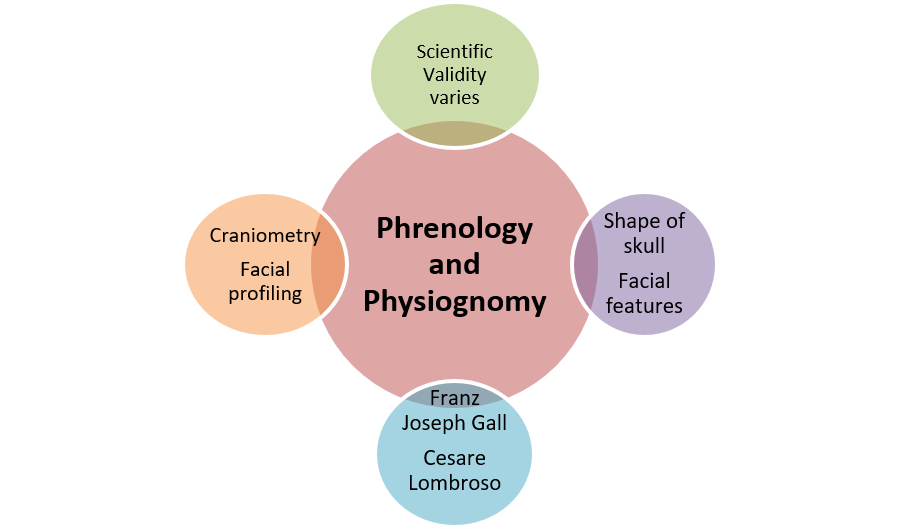
Figure 1: Differences between Phrenology and Physiognomy
Definition
The study of shape and size of skull is known as phrenology as they indicate one’s character and mental abilities. In 1796, it was introduced by Franz Joseph Gall as he put forth that various regions of brain control particular characteristics, including criminal impulses. On the other hand, physiognomy focuses on the facial features as well as physical appearance as the indicators of personality and moral character. In 1876, Cesare Lombroso introduced the concept in his work titled “L’Uomo Delinquente” (The Criminal Man), that explained atavism and criminal behavior.
Historical Perspective
In the early 19th century, phrenology gained prominence in Europe especially, in Britain and Germany, as part of the Enlightenment’s fascination with the brain. The phrenological maps by Gall and Spurzheim divided the skull into 27 regions in correspondence to the mental faculties encompassing destructiveness, benevolence or acquisitiveness. Amid the late 19th century, physiognomy rose to prominence in the criminological circles of Italy and France. The physiognomic criminology of Lombroso advocated that features like sloping forehead or asymmetrical faces depicted congenital criminality. Other positivist theorists including Enrico Ferri and Raffaele Garofalo were swayed by these ideas and incorporated the effect of environment and heredity into their theories.
Methods of Assessment
The skull measurements (craniometry) are used by phrenologists in order to assess criminal tendencies. They often examine the heads of prisoners to indicate “organs of destructiveness. Whereas, facial profiling as well as anthropometric techniques for example, measuring noses, jaws and skull angles are adopted by physiognomists such as the Alphonse Bertillon’s anthropometry system (1880s). These techniques were later used by early police forces in Europe. These approaches were evolved into forensic profiling and biometric identification in the twentieth century.
Scientific Validity
Phrenology and physiognomy are recognized as pseudoscience by the modern neuroscience as well as psychology. The contemporary research, that uses MRI and behavioral genetics, unveils that while biological characteristics influence an individual’s behavior, environmental and social factors hold great significance. For example, in 2023, a meta-analysis by the American Psychological Association revealed that environmental deprivation and traumahas been the cause of 62% of variance in violent behavior whereas, biological tendencies accounted for 12–15%.
Impact on Society
In spite of the scientific invalidation, these theories still had a far-reaching impact on the society. For instance, in the 19th century, the phrenological profiling was used by British Empire and later on, by Nazi Germany as well to justify eugenic policies. Moreover, sometimes physical appearance and ethnic identity also influences the police suspicion and echoes of biological prejudices still persist.
Conclusion
To cap it all, despite being outdated, phrenology and physiognomy constitute a significant historical phase in the evolution of criminology. These theories are the humanity’s first organized attempt to identify biological explanations of crime and deviance. Modern biosocial, psychological, and sociological theories – that emphasize the role of nature and nurture – emerged because of the rejection of these theories. While physical characteristics are no longer used to determine criminality in modern criminology, neuroscience and behavioral genetics continue to look for connections between biology, brain function, and environment. According to Adrian Raine,
“Biology is not destiny, but understanding the brain is essential to understanding the roots of violence.”
(C) Corporal Punishment and Capital Punishment
Outline
1-Introduction
2-Difference between Corporal Punishment and Capital Punishment
- ✓Definition
- ✓Severity
- ✓Purpose
- ✓Legal Status
3-Conclusion
Answer to the Part C of the Question
Introduction
One of the primary concerns of criminology and criminal justice has been punishment. It is a reflection on response of society towards crime and deviance using institutionalized means of social control. Corporal punishment and capital punishment are the most severe and disputable forms of punishment. Though both types of punishments aim to discourage criminal behavior but differ in scope, philosophy and legality. Historically grounded in retributive and deterrent principles, these punishments have evolved alongside changes in moral, legal and human rights discourse. Although most of the countries have abolished or restricted these punishments however, they persist under specific circumstances in some countries including Pakistan that cite justifications based on culture, religion and deterrence. Emile Durkheim delineates,
“Punishment is the visible symbol of the moral solidarity of society.”

Difference between Corporal Punishment and Capital Punishment
Definition
The deliberate infliction of physical suffering for criminal offence as a form of discipline or punishment is called corporal Punishment. For example, flogging, caning and whipping are included in corporal punishment which was extensively used in prisons, judicial systems or educational institutions until mid-20th century. On the other hand, death penalty or execution of a person by the state after a criminal conviction typically, for treason, murder and terrorism is known as capital Punishment. Both types of punishment are studied through the theoretical lens of the Classical School of Criminology which has its roots in the research of Cesare Beccaria (1764) and Jeremy Bentham (1789). They endorsed deterrence and proportionality while warning against excessive cruelty.
Severity
The magnitude of harshness of the two punishments varies significantly as corporal punishment causes temporary physical harm however, does not result in death. Contrarily, capital punishment is death penalty that ends one’s life permanently and is irreversible.
Purpose
According to the Retributive Theory that is based on “an eye for an eye”, punishment should be in accordance with the crime. Besides, the Deterrence Theory delineates that punishment should prevent other people from committing crimes. While corporal punishment has historically proved to be an immediate deterrent as well as a tool of discipline in schools and correctional institutions, capital punishment is justified through general deterrence and retribution.
Legal Status
According to a 2023 report by UNICEF, corporal punishment has been prohibited in schools and prisons of more than 130 countries. Nonetheless, it is still legally permissible in 67 countries, justified through culture and religion. In 2024, Amnesty International reported that capital punishment is abolished in law or practice in 146 countries however, it is still retained by 55 states. For example, according to the Human Rights Commission Pakistan, death penalty still persists in the country over 33 capital offences such as blasphemy and terrorism.
Conclusion
To sum it up, though corporal and capital punishment have been historically justified through deterrence and retribution but modern criminology has increased scrutiny. The evolving ethical considerations of human rights and empirical evidence now question the validity of these punishments. The persistence of corporal and capital punishments in developing countries is not a criminological necessity but because of deep-rooted socio-political and cultural factors. The contemporary judicial systems are transforming from punitive to restorative paradigms, accentuating the importance of rehabilitation, proportionality and human rights over physical and fatal punishment. According to Amnesty International,
“The death penalty is a symptom of a culture of violence, not a solution to it.”
(D) Sociology of Law, Criminal Etiology and Penology
Outline
1-Introduction
2-Difference betweenSociology of Law, Criminal Etiology and Penology
- ✓Definition and Scope
- ✓Theoretical Foundation
- ✓Purpose and Policy Implications
- ✓Methods and Approach
3-Conclusion
Answer to the Part D of the Question
Introduction
Criminology is a multidisciplinary field that involves the study of crime, criminal behavior, law making as well as the societal response to law breaking. Sociology of Law, Criminal Etiology and Penology constitute the three interconnected subfields within this broader domain. These subfields collectively delineate the formulation of laws, underlying causes behind an individual’s involvement in criminal activity and the response of society via punishment and correction. Each subfield signifies a distinct stage of the criminal justice framework, encompassing development of laws, crime causation and social reaction. Such frameworks help in reforming the criminal justice system by providing useful tools for analysis particularly, in countries like Pakistan, where criminality is caused by social inequality, weak institutions and cultural norms. According to Robert K. Merton,
“Deviant behavior is a symptom of the social structure, not individual pathology.”
Difference between Sociology of Law, Criminal Etiology and Penology
Definition and Scope
Sociology of Law is the study of relationship between law and society and it centers on how laws emerge, their application and influence on social behavior. Despite this, it deals with the social norms and institutions shaping legal systems. For instance, in Pakistan, blasphemy and family laws conform to the religious and cultural norms of the society. Criminal Etiology examines the psychological, biological and sociological origins of criminality as well as aims at understanding the reasons behind criminal activities of individuals. The primary objectives of penology are punishment, correction and rehabilitation of criminals. Also, it investigates the goals and consequences of criminal penalties.
Theoretical Foundation
Sociology of Law is based on the sociological perspective that include theories of Functionalism by Emile Durkheim, Conflict Theory by Karl Marx and Rational-Legal Authority by Max Weber. On the other hand, criminal etiology is grounded in theories like Biological Positivism that explains the biological and hereditary causes of crime, Strain Theory by Robert K. Merton that delineates how social disparity leads to deviance and Learning Theory by Sutherland. Penology draws on the philosophical and practical theories of punishment including Retributive Theory, Deterrence Theory and Rehabilitation Theory.
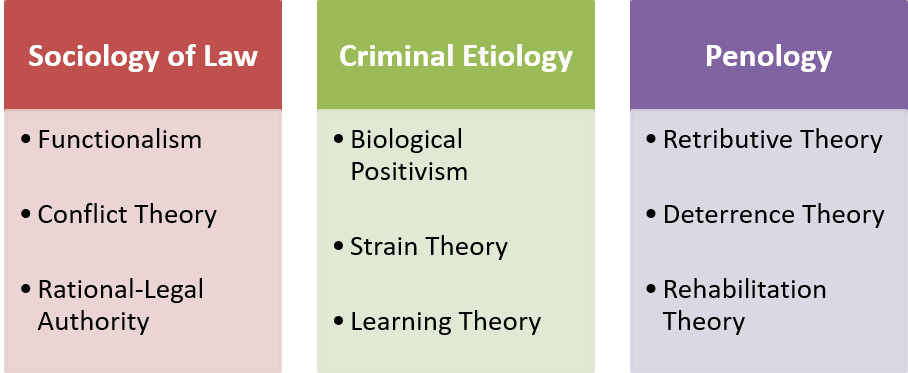
Figure 2: Theoretical Foundations of Sociology of Law, Criminal Etiology and Penology
Purpose and Policy Implications
Sociology of law shapes law reform which identifies how judicial systems perpetuate injustice and inequality. It assists in making laws more socially realistic for example, property and gender laws ought to be reformed and properly implemented to ensure social justice in Pakistan. Policies related to prevention of crime are guided by criminal etiology by dealing with the underlying causes such as mental health, education and job security. For instance, the social welfare programs help in minimizing juvenile delinquency. Correctional policy is shaped by penology, emphasizing humane treatment, minimizing recidivism and rehabilitation. It includes policies like replacement of severe incarceration with community service and facilitating rehabilitation.
Methods and Approach
Qualitative methods including case studies, ethnographic research as well as legal and sociological analysis is used in sociology of law. For instance, research on implementation of women’s protection laws in rural Pakistan comes under the domain of sociology of law. On the other hand, criminal etiology incorporates quantitative approaches along with experimental ones that encompass crime mapping, social surveys and psychological testing. Nonetheless, evaluative and policy-based approaches are adopted in penology to investigate rates of recidivism, prison data as well as rehabilitation outcomes. These methods can be applied while measuring the prosperity of parole programs and non-custodial sentencing.
Conclusion
To cap it all, the cornerstone of criminological research is the triad of Sociology of Law, Criminal Etiology, and Penology. They present a systematic comprehension of the ways society defines crime, what motivates individuals to indulge in criminal activities and how punishment is administered. Modern criminology adopts an integrated, evidence-based approach that takes into account social, psychological, and environmental factors, whereas early theories concentrated on biology and morality. In case of Pakistan, the foremost challenge is transforming these theories into concrete reforms such as formulating laws based on justice, reforming the correctional procedures and tackling the socio-economic disparities that cause crime and deviance. In his work titled “On Crime and Punishments”, Cesare Beccaria puts forth,
“It is better to prevent crimes than to punish them.”

CSS Solved Past Papers’ Essays
Looking for the last ten years of CSS and PMS Solved Essays and want to know how Sir Kazim’s students write and score the highest marks in the essays’ papers? Then, click on the CSS Solved Essays to start reading them.
CSS Solved Essays
CSS Solved General Science & Ability Past Papers
Want to read the last ten years’ General Science & Ability Solved Past Papers to learn how to attempt them and to score high? Let’s click on the link below to read them all freely. All past papers have been solved by Miss Iqra Ali & Sir Ammar Hashmi, Pakistan’s top CSS GSA coach having the highest score of their students.