CSS Solved Criminology Past Paper 2026 | Criminological Reasons Behind the Rise of Misinformation and Disinformation

Question Breakdown
In this question, the examiner has inquired about the criminological reasons behind the rise of misinformation and disinformation particularly, amid political conflicts. The above query comprises of one main part that requires explanation regarding the criminological reasons behind the increasing misinformation and disinformation especially, during political conflicts. Aspirants should start their answer by defining misinformation and disinformation then, explain the criminological reasons behind it particularly, in political conflicts. Addition of scholarly references, definitions and examples will make the answer outstanding. Moreover, flow charts, diagrams, tables and relevant quotations can further ameliorate the quality of the answer.
Outline
1-Introduction
2-Definition of Misinformation and Disinformation
3-Criminological Reasons behind the Rise of Misinformation and Disinformation
- ✓Calculated Decisions of Offenders
- ✓Learnt Behavior
- ✓Psychological and Sociological Reasons
4-Criminological Reasons behind Increasing Misinformation and Disinformation amid Political Conflicts
- ✓Strain regarding Achieving Legitimate Goals
- ✓Reinforcing False Narratives
- ✓Labelling Opponents
- ✓Power Structures
- ✓Instability and Normlessness
- ✓Identity Politics and Polarization
5-Critical Analysis
6-Conclusion
Answer to the Question

Introduction
In the contemporary digitalized era, misinformation and disinformation refer to the false information without intent to harm and deliberately spread to deceive, respectively. These types of false information have become powerful and significant tools amid political conflicts. Manipulation of information can be considered as a non-traditional form of crime that is envisioned from election interference to geopolitical propaganda and sectarian polarization. Furthermore, this phenomenon is exacerbated amid political conflicts because social disintegration, fear and emotional vulnerability are envisioned during the time of instability, which serve as a fertile ground for manipulation. Multidimensional theories of criminology helps in unveiling the causes behind engagement in systematic disinformation campaigns by individuals, groups as well as states. In his book “Suicide”, Emile Durkheim puts forth,
“When society is disturbed by some painful crisis or by beneficent but abrupt transitions, it is temporarily incapable of exercising its influence.”
Definition of Misinformation and Disinformation
Misinformation refers to the false or misleading information that is disseminated without any deliberate intention to cause harm to the public or certain organizations. On the other hand, creation and sharing of false information with an intention to cause harm, destabilize institutions, manipulate public opinion and gain political benefits is known as disinformation. Amid political conflicts, spread of disinformation is planned in order to escalate the tensions, mobilize people and support bases as well as proscribe the opponents.
Criminological Reasons behind the Rise of Misinformation and Disinformation
Criminology offers a theoretical and analytical framework that delineates the reasons behind manipulation through false information. During political conflicts, social tensions, mistrust among institutions and competition for acquiring power is intensified. As a result, a conducive environment is created for deviant communication strategies among individuals, groups and institutions.
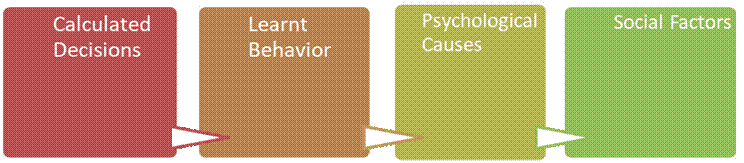
Figure 1: Reasons behind Increasing Misinformation and Disinformation
Calculated Decisions of Offenders
According to Rational Choice Theory, calculated decisions are made by offenders after doing cost-benefit analysis. Along with Clarke and Cornish, classical criminologist Jeremy Bentham also advocated that man is a rational being who weighs costs and benefits then, commit crime. For example, in digital environments, there is a lesser risk of detection, anonymity can be ensured and comparatively lesser legal consequences while the political gain is higher.
Learnt Behavior
According to the CNN Effect, when an information is repeatedly broadcast through media sources for 24 hours and seven days a week then, people tend to believe it. Due to the repeated exposure to a misinformation, people adopt and replicate as an acceptable conduct without verifying it. The spread of disinformation is a learned behavior, as explained by Edwin Sutherland’s Social Learning Theory. While political factions normalize propaganda, echo chambers strengthen the falsified narratives.
Psychological and Sociological Reasons
Disintegrated societies are more prone to manipulation and spread of misinformation as well as disinformation. Furthermore, according to the concept of moral panic by Stanley Cohen, exacerbated threats result in social hysteria. In order to increase the spread of misinformation, political actors exploit the existing fear among people.
Criminological Reasons behind Increasing Misinformation and Disinformation amid Political Conflicts
Different criminological theories such as Rational Choice Theory, Social Learning Theory, Labelling Theory and Strain Theory etc. delineate the motivations, social factors and structural causes that lead to the creation and dissemination of false information.
Strain regarding Achieving Legitimate Goals
According to Strain Theory by Robert K. Merton, when an individual is unable to achieve legitimate goals with socially legitimized means then, one feels stress or strain. As a result, individuals try to find deviant alternatives to meet their objectives. Amid political conflicts, political actors perceive threat, their supporters are frustrated and marginalized groups feel excluded. Therefore, disinformation is used as a tool of “innovation” in order to acquire power and revenge when conventional means become insufficient.
Reinforcing False Narratives
According to the Differential Association Theory by Edwin Sutherland, human behavior is influenced by interaction and environment. Disinformation disseminates within politically similar networks where people are mostly exposed to similar viewpoints. Furthermore, the online communities strengthen false narratives via algorithmic echo chambers, biased media and group chats. As a result, there deviant communication patterns are internalized by individuals.
Labelling Opponents
In a political conflict, opponents label each other as extremists, traitors or foreign agents. The opponents become a target of disinformation campaigns and are portrayed as traitors in order to acquire power. As a result of this labelling and stigmatization, factions internalize the deviant roles.
Power Structures
During the political conflicts, influential groups exploit the narratives in order to sustain power and control. Furthermore, the state actors suppress dissent and opposing groups utilize disinformation to challenge the authority. According to the Conflict Theory by Karl Marx, power structures are reflected in the legal and information systems. In a conflicting situation, it is envisioned that misinformation is used as a weapon to ensure ideological dominance and acquire power.
Instability and Normlessness
Conflicts lead to political instability and normlessness, as indicated by Emile Durkheim’s Anomie Theory. As a result, a decrease in social cohesion, lack of trust in institutions and blurring moral boundaries are envisioned. This leads to thriving misinformation because in such circumstances, truth is not certain.
Identity Politics and Polarization
Amid political conflicts, disinformation exacerbates ethnic, religious and nationalist divisions. According to the theory of Instrumentalism by Paul Brass, elites (influential political actors) mobilize the people on the basis of their ethnic identity particularly, in South Asia. Furthermore, polarized societies are increasingly susceptible to manipulative narratives presented by the political actors through spread of disinformation.
Critical Analysis
The increasing spread of misinformation and disinformation cannot be exclusively delineated through the advancement of technology and development of social media platforms. In fact, it reflects the deep-rooted sociopolitical conflicts as well as structures among the contemporary societies. Manipulation of information has become convenient due to the increasing economic disparity, political polarization, struggling democratic institutions and diminishing public confidence in mainstream media and governments. People accept narratives that are in accordance with their preconceived beliefs in these highly polarized environments. Individuals of such societies are more susceptible to planned disinformation tactics. Disinformation is a hybrid form of deviance as it combines social deviance, cybercrime as well as political crime. It is because while it manipulates digital technologies and undermines responsible communication, it is also utilized strategically by political actors and state institutions. Nonetheless, the issue is not only technological but also deep-rooted in structures and institutions of a country which necessitates rigorous digital governance, accountability and media literacy.
Conclusion
In a nutshell, the rise of misinformation and disinformation amid political conflicts is among the most intricate challenges of the digitalized age. However, it is not only because of technological advancement but also due to the weakness of institutions and embedded socio-political structures. Manipulated information thrives in circumstances such as polarization, trust deficit in institutions, ideological competition as well as economic grievances. This increasing spread of misinformation and disinformation is explained through the criminological perspectives such as Social Learning Theory, Rational Choice Theory, Conflict Theory and Anomie Theory etc. According to these theories, disinformation is disseminated after employment of a calculated strategy in order to obtain power, influence public opinion and destabilize the opponents. Therefore, adopting sustainable solutions that go beyond punitive measures is paramount. For countering these malicious information campaigns, strengthening democratic institutions, ensuring transparency in governance, ameliorating digital literacy and fostering responsible practices in media is crucial. In “The Origins of Totalitarianism”, Hannah Arendt puts forth,
“The ideal subject of totalitarian rule is not the convinced Nazi or the convinced Communist, but people for whom the distinction between fact and fiction no longer exists.”
CSS Solved Past Papers’ Essays
Looking for the last ten years of CSS and PMS Solved Essays and want to know how Sir Kazim’s students write and score the highest marks in the essays’ papers? Then, click on the CSS Solved Essays to start reading them.
CSS Solved Essays
CSS Solved General Science & Ability Past Papers
Want to read the last ten years’ General Science & Ability Solved Past Papers to learn how to attempt them and to score high? Let’s click on the link below to read them all freely. All past papers have been solved by Miss Iqra Ali & Sir Ammar Hashmi, Pakistan’s top CSS GSA coach having the highest score of their students.