CSS Pakistan Affairs | Issues that have kept Pakistan and India from Building Normal Relations
The following assignment question for CSS Pakistan Affairs is solved by Aasma Khalid under the supervision of Howfiv’s Pakistan Affairs and Current Affairs Coaches: Miss Iqra Ali and Sir Ammar Hashmi. She learnt how to attempt 20 marks question and essay writing from Sir Syed Kazim Ali, Pakistan’s best CSS and PMS English essay and precis teacher with the highest success rate of his students. This solved question is attempted on the pattern taught by Sir to his students, scoring the highest marks in compulsory and optional subjects for years.

Outline
1-Introduction
2-Historical Background: Origin of Indo-Pak Rivalry in British India
3-Main Issues that have Prevented Normalization of Pakistan-India Relations Since 1947
- Kashmir Issue: The Unresolved Core Dispute and Catalyst for Indo-Pak Wars
- 1947-1948 War
- 1965 War
- Kargil Conflict, 1999
- Water Issue: Violation, Politicization and Abeyance of IWT by India
- Baghliar Dam Dispute (2005-2007)
- Kishanganga(Neelum) Project Dispute (2010-2013)
- Suspension of IWT in 2015
- Territorial Issues: Siachen and Sir Creek Disputes
- Operation Meghdood, Operation Rajiv
- Operation Qaidat and Operation Chumik
- Political Issues: Nationalist Politics and Anti-Pakistan Rhetoric in India
- Babri Mosque Demolition
- Balakot Airstrikes
- Revocation of Article 370 and 35-A
- Geostrategic Issues: Chabahar Port and India’s Opposition to CPEC
- Chabahar Port as Counterweight to Gwadar Port
- Security Issues: Terrorism-Related Crises and Recurrent Terrorist Incidents
- Uri Attack
- Pulwama Attack
- Pahalgam Attack
4-Suggestions to Resolve Conflicts and Build Strong Ties
5-Conclusion
Answer to the Question
Introduction
Pakistan and India have remained strategic rivals since their independence in 1947, despite being neighboring states with shared historical, cultural, and geographical ties rooted in the pre-partition era. Over the decades, unresolved disputes relating to Kashmir, water resources, territorial boundaries, security, and political mistrust have prevented the two countries from building normal and stable relations. From 1947 to 2025, recurring military confrontations, diplomatic crises, and mutual distrust have continued to undermine regional peace and cooperation. As neither country has achieved a lasting solution through confrontation, both should pursue sustained dialogue, respect bilateral agreements, strengthen confidence-building measures, and resolve their disputes through peaceful diplomacy to promote regional stability and shared prosperity.
Historical Background: Origin of Indo-Pak Rivalry in British India
The roots of Indo-Pak rivalry can be traced back to the final decades of British colonial rule, when political differences between the major communities of the subcontinent gradually transformed into competing visions for the future state. The Two-Nation Theory and the demand for a separate homeland for Muslims led to the creation of Pakistan through the Partition of British India in 1947. However, the partition process was accompanied by communal violence, mass migration, and administrative challenges, creating deep mistrust between the two newly formed states. Furthermore, several issues remained unresolved at the time of independence, including the status of princely states, division of assets, boundary demarcation, and canal water arrangements. These unresolved disputes became the foundation of the enduring rivalry between Pakistan and India and continued to hinder the establishment of normal relations after 1947.
Main Issues that have Prevented Normalization of Pakistan-India Relations Since 1947
Since gaining independence, Pakistan and India have encountered numerous political, territorial, security, and strategic disputes that have prevented them from establishing stable and normal neighborly relations. The following are the major issues that have sustained bilateral tensions since 1947.
- Kashmir Issue: The Unresolved Core Dispute and Catalyst for Indo-Pak wars
Kashmir issue has remained a bone of contention between Pakistan and India since independence; this unresolved dispute played a role as a catalyst for Indo-Pak Wars. The first Indo-Pak war was fought immediately after independence in 1947, which resulted in the division of Kashmir into two parts; Pakistan administered Kashmir and India administered Kashmir. In September 1965, another war broke out between Pakistan and India, when the Mujahideen sought to liberate the occupied territories from India. The third Indo-Pak war, known as the Kargil War, was also fought for Kashmir in 1999. Consequently, these conflicts contributed to regional instability and deepened mistrust, while relations between Pakistan and India continued to deteriorate over the unresolved Kashmir issue.
- Water Issues: Violation, Politicization and Abeyance of IWT by India
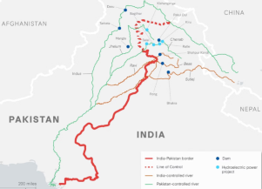
India started hydropower projects on the Chenab and Neelum rivers, which were allotted to Pakistan under the Indus Water Treaty, 1960. India constructed the controversial Baghliar Dam, Kishanganga Dam and Ratle Dam despite objections raised by Pakistan, thus violating Article VII of the IWT, 1960. Moreover, after the Pehalgam Terror Attack in 2015, India alleged Pakistan’s involvement in the attack. Resultantly, India politicized the IWT and held in abeyance until Pakistan ends support for cross-border terrorism. Thus, the unresolved water issue has kept both the states away from building good relations.
- Territorial Issues: Siachen and Sir Creek
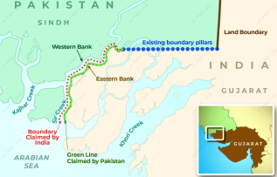
The conflict in Siachen stems from the incompletely demarcated territory on the map, with both India and Pakistan claiming the territory. The Siachen Glacier is the highest battleground on earth, where India and Pakistan have fought intermittently since 13 April 1984. Both countries maintain a permanent military presence in the region at a height of over 6,000 meters (20,000 ft.). Operation Meghdood, Operation Rajiv, Operation Qaidat, and Operation Chumik were conducted by both countries to occupy the Siachen Glacier. Similarly, the Sir Creek dispute concerns a 96-kilometre tidal estuary between Pakistan’s Sindh and India’s Gujarat. Pakistan bases its claim on the 1914 Bombay Government Resolution, while India supports the Thalweg principle. The dispute affects maritime boundaries and exclusive economic zones. Thus, unresolved territorial disputes continue to fuel mistrust and hinder normal bilateral relations.
- Political Issues: Nationalistic Politics and Anti-Pakistan Rhetoric in India
Nationalist politics in India, especially under Prime Minister Narendra Modi’s government, uses anti-Pakistan rhetoric and Hindu nationalist (Hindutva) ideology to win votes and shape national security views. Hindu nationalism primarily calls for eliminating or assimilating non-Hindus, specifically Muslims. In 1992, the Hindu nationalist mobilization reached its peak along with BJP endorsement of the construction of a Hindu temple on the site of the Babri mosque. Similarly, in the 2019 general elections, the BJP campaign was built on the surgical strikes of September 2016 and alleged Balakot airstrikes of February 2019. Moreover, in 2019, the BJP revoked the special status of Kashmir by revoking Article 370 and 35-A to gain public trust. India has seen the promotion of anti-Pakistan narratives; for instance, Brussels-based NGO EU DisinfoLab reported a global network across 65 states that consisted of 265 websites significantly linked to an Indian company, the Srivastava Group, which is primarily responsible for anti-Pakistan lobbying and propaganda in Europe. Consequently, identity-based political mobilization and hostile narratives have contributed to mistrust and hindered efforts towards sustained normalization between the two countries.
- Geostrategic Issues: Chabahar Port and India’s Opposition to CPEC
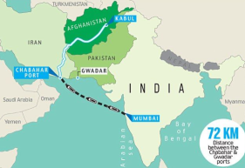
Geostrategic competition between Pakistan and India has also hindered the normalization of relations, particularly through competing regional connectivity initiatives. Pakistan’s CPEC, a flagship project of the Belt and Road Initiative, aims to enhance regional trade through Gwadar Port, while India has developed the Chabahar Port in Iran to expand its connectivity with Afghanistan and Central Asia, bypassing Pakistan’s Gwadar Port. Thus, the strategic competition between these projects reflects broader regional rivalries and differing geopolitical interests, contributing to mistrust between the two countries.
- Security Issues: Terrorism-Related Crises and Recurrent Terrorist Incidents
Terrorism related crises have remained a major obstacle to Pakistan–India normalization as India has repeatedly blamed Pakistan-based militant groups for several high-profile attacks, including the 2001 Parliament attack, 2008 Mumbai attacks, 2016 Uri attack, 2019 Pulwama attack, and 2025 Pahalgam attack. Pakistan has rejected allegations of state involvement and maintained its position regarding these incidents. However, these crises have repeatedly escalated diplomatic tensions, triggered military confrontations, disrupted peace initiatives, and widened the trust deficit between the two nuclear-armed states, thereby hindering the development of normal bilateral relations.
Suggestions to Resolve Conflicts and Build Strong Ties
Despite decades of conflict over territorial, political, and security issues, neither Pakistan nor India has achieved a lasting resolution to their disputes. Both countries should use soft power to get out of these conflicts and strengthen the ties. First of all, multi-track diplomacy can be the most significant step towards conflict resolution, which includes business integration, media, religion diplomacy i.e. Kartarpur Corridor. Secondly, increased trade and cross-border investment between Pakistan and India can create mutual economic interests, reducing the likelihood of conflict. Moreover, modernization and expansion of water storage infrastructure, engaging in technical diplomacy and legal expertise, and enhancing regional & global water partnerships can play a major role in settling water disputes. Lastly, Joint ventures in sectors such as tourism, agriculture, energy, and infrastructure can build trust and strengthen people-to-people connections across the region.
Conclusion
In conclusion, Pakistan and India have remained unable to establish normal and peaceful relations since 1947. The persistence of unresolved disputes, including Kashmir, water, territorial, political, geostrategic, and security issues, has continued to fuel mistrust and periodic confrontation between the two states. Decades of conflict have demonstrated that military measures have failed to produce a lasting settlement of these disputes. Therefore, durable peace and stability require meaningful dialogue, peaceful resolution of outstanding issues in accordance with international law, mutual respect for sovereignty, and the implementation of confidence-building measures to foster cooperative and normal bilateral relations.

CSS Solved Past Papers’ Essays
Looking for the last ten years of CSS and PMS Solved Essays and want to know how Sir Kazim’s students write and score the highest marks in the essays’ papers? Then, click on the CSS Solved Essays to start reading them.
CSS Solved Essays
CSS Solved Islamiyat Past Papers
Want to read the last ten years’ Islamiyat Solved Past Papers to learn how to attempt them and to score high? Let’s click on the link below to read them all freely. All past papers have been solved by Pakistan’s top CSS Islamiyat coaches having the highest score of their students.
CSS Solved Islamiyat
CSS Solved General Science & Ability Past Papers
Want to read the last ten years’ General Science & Ability Solved Past Papers to learn how to attempt them and to score high? Let’s click on the link below to read them all freely. All past papers have been solved by Pakistan’s top CSS GSA coachez having the highest score of their students.
CSS Solved General Science & Ability
CSS Solved Pakistan Affairs Past Papers
Want to read the last fifteen years’ Pakistan Affairs Solved Past Papers to learn how to attempt them and to score high? Let’s click on the link below to read them all freely. All past papers have been solved by Pakistan’s top CSS Pakistan Affairs coaches having the highest score of their students.
CSS Solved Pakistan Affairs
CSS Solved Current Affairs Past Papers
Want to read the last fifteen years’ Current Affairs Solved Past Papers to learn how to attempt them and to score high? Let’s click on the link below to read them all freely. All past papers have been solved by Pakistan’s top CSS Current Affairs coaches having the highest score of their students.
CSS Solved Current Affairs