CSS Solved Criminology Past Paper 2020 | Institutional Modern Strategies Used for the Reintegration of the Criminals in Pakistan

Question Breakdown
In this question, the examiner has inquired about recidivism as well as the kind of institutional modern strategies that could be used for the reintegration of the criminals in Pakistan. The above query comprises of two main parts that require explanation which include; explanation of recidivism and institutional modern strategies that could be used for the reintegration of the criminals in Pakistan. Aspirants should start their answer by defining recidivism and explaining it. Then, the modern strategies for reintegration can be mentioned. Addition of scholarly references, definitions and examples will make the answer outstanding. Moreover, flow charts, diagrams, tables and relevant quotations can further ameliorate the quality of the answer.
Outline
1-Introduction
2-Explaining Recidivism
- ✓Definition
- ✓Theoretical Foundation
- ✓Essentials and Measurement of Recidivism
- ✓Recidivism in Pakistan
3-Major Causes of Recidivism in Pakistan
4-Institutional Modern Strategies for Reintegration of the Criminals in Pakistan
- ✓Correctional Prisons
- ✓Skill-Based Empowerment
- ✓Community-Based Reintegration Programs
- ✓Restorative Justice Mechanisms
- ✓Structured Supervision: Probation, Parole and Aftercare Systems
- ✓Treating the Trauma via Institutional Mental Health and Rehabilitation
- ✓Incentivized Employment Pathways for Former Offenders
5-Critical Analysis
6-Conclusion

Answer to the Question
Introduction
The tendency of a felony to commit the criminal activity repeatedly is known as recidivism which presents one of the most persistent challenges of criminal justice system of Pakistan. While it highlights the shortcomings of an individual, it also reflects on the institutional weaknesses in rehabilitation, post-release reintegration as well as education. In 2024, the Human Rights Commission of Pakistan (HRCP), around 65% of the released criminals return to crime within three years primarily because of unemployment, lack of institutional support as well as social stigma. Therefore, modern strategies for reintegration of the criminals and holistic rehabilitative approach is required for dealing with the issue of recidivism. In “Crime, Shame and Reintegration”, John Braithwaite puts forth,
“Reintegrative shaming allows the offender to recognize harm and rejoin the community.”
Explaining Recidivism
Definition
Recidivism can be defined as the repetition of criminality among individuals particularly, after conviction, release or punishment. It often occurs in criminals who were first convicted as juvenile and is the measure of efficacy of correctional institutions and criminal persistence. According to the Black’s Law Dictionary, recidivism refers to,
“The tendency of a convicted criminal to relapse into a habit of criminal activity.”
On the other hand,
“Recidivism means commission of crime of a habitual criminal.”
Theoretical Foundation
According to the Labelling Theory by Howard Becker, when an individual is being labeled as a “criminal” then, it leads to one’s exclusion from the society and reinforces one’s identity as an offender. This results in the likelihood of associating with criminal groups and committing the crimes again. According to Sutherland, recidivism depends upon the social psychology of offender as well as inadequacy of reformative techniques. Moreover, it has greater tendency in urban areas as compared to rural ones because of their increased cost of living. It is also higher in men as compared to women due to their higher social status and because prison life becomes normal for them so they want to go back as association with other criminals develops a sense of loyalty. On the other hand, rejection of parole and probation makes habitual criminals the hardened ones. Lack of employment opportunities after release and poverty makes them feel at home in prison.
Essentials and Measurement of Recidivism
The essentials of recidivism include, frequent commission of crime, already been convicted once, no fear from law or society and no link to mental and physical capacity of others. The effect of punishment is measured by measuring rate of recidivism not only by looking at arrest data as all crimes are not discovered. Moreover, recidivism can be measured by interviewing offender, analyzing officially recorded criminal justice events such as behavior or criminal activity in jail, charting a new offence over elapsed time as well as measuring time elapsed until next crime.
Recidivism in Pakistan
According to The Crisis Group,
“Overpopulated, understaffed and poorly managed system of Pakistan prisons is breeding ground for criminality and militancy.”
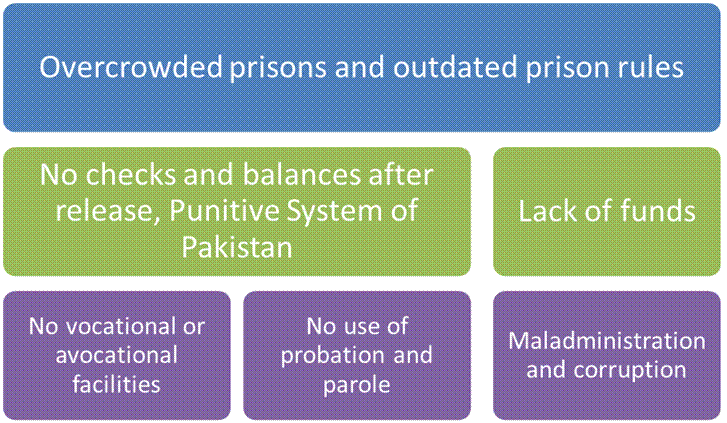
Figure 1: Causes of Recidivism in Pakistan
In 2024, United Nations Office on Drugs and Crime (UNODC) reported that prisons in Pakistan are overcrowded and hold more than 88000 inmates while the capacity is of 65000. Furthermore, there is no concept of positive reinforcement and punishment means abuse and torture for Pakistan Prison system thus, making hardened criminals. The prison rules are outdated and the last amendment in Prison Act 1894 was made in 1978.After the release of prisoners, there are no checks and balances as well as due to lack of funds, no medical treatment is given therefore, HIV and AIDS are rampant. Mostly under-trial or juveniles are kept in adult prisons and there are only 9 Borstal Institutions. Recidivism is common among juveniles because of social stigma as when they are acquitted, they are labelled and rejected by the society as well as deprived of job security due to which they are bound to commit crimes again. In addition, only 22% of prisons offer vocational training and unemployment is a major cause of recidivism along with poverty and social labelling. According to the Human Rights Commission of Pakistan report of 2024, due to poor mental health support, around 35% of prisoners suffer from untreated psychological conditions.
Major Causes of Recidivism in Pakistan
Overcrowding is a serious problem in Pakistani prisons; they house not only hard-core criminals but also petty offenders, those with criminal records for the first time, and under-trial convicts. According to Edwin Sutherland’s Differential Association Theory, crowded barracks serve as “schools of crime” and provide offenders who committed minor crimes with more sophisticated methods of committing crimes, as well as a deviant system of values instead of a reformatory one. Once released, ex-offenders are subjected to economic exclusion because of their criminal record and the lack of marketable skills. Based on Robert Merton’s Strain Theory, once former convicts have been denied access to legal opportunities and economic security, severe economic strain forces them to commit theft, fraud, and smuggling of narcotic substances. In Pakistani society, which is strongly connected, former offenders, particularly juveniles and women, face severe ostracism from their families and community. According to Howard Becker’s Labeling Theory, persistent societal rejection makes people feel themselves “criminals.” Pakistan does not have an organized structure for parole, probation, and halfway houses to guide and help inmates as they make the crucial step toward reintegrating themselves back into society. The absence of such an organized institution, along with the absence of financial grants and housing, causes many ex-convicts to revert to their old ways soon enough. Many inmates, either because they were not treated properly for their addictions before going to jail or because of being subjected to torture in solitary confinement, are psychologically unstable.
Institutional Modern Strategies for Reintegration of the Criminals in Pakistan
In order to break the cycle of recidivism in Pakistan, modern institutional strategies that align with the international rehabilitation and reintegration models ought to be adopted.
Correctional Prisons
It is crucial to transform the punitive prisons into correctional one founded upon rehabilitation models. Besides, introducing psychological counseling, skill development and literacy programs will also increase focus on reformation and social reintegration. For example, in 2023, Punjab Prison Reforms introduced technical training for prisoners particularly, in information technology, mechanics as well as tailoring.
Skill-Based Empowerment
In 2024, the United Nations Development Program (UNDP) initiated Prison Education Project in Khyber Pakhtunkhwa that reduced recidivism by 20%. Providing employable skills to inmates is essential for ensuring financial independence after release therefore, industry-prison partnerships for vocational certification ought to be implemented.
Community-Based Reintegration Programs
According to the Social Control Theory by Travis Hirschi, stronger social bonds can help in mitigating criminal activity and recidivism. Through the community reintegration programs and centers, not only support should be provided but also giving residence, job placement and counseling is crucial. For instance, a global model for gradual reintegration is that of Community Rehabilitation Centers in Malaysia.
Restorative Justice Mechanisms
Restorative justice assists in restoring the sense of belonging among offenders and encouraging criminal-victim negotiations in order to promote reconciliation and accountability. Such models can be integrated by the Alternative Dispute Resolution (ADR) and Musalihati Committees in Pakistan. The offenders can be reintegrated within the communities through forgiveness and restorative justice mechanisms.
Structured Supervision: Probation, Parole and Aftercare Systems
In order to ensure reintegration of criminals, the capacity of probation officers ought to be expanded nationwide. For strengthening probation and parole systems, follow-up rehabilitation, digital monitoring and social welfare coordination can be adopted. For example, Probation Reform Model of the United Kingdom incorporates case management systems to monitor reentry outcomes.
Treating the Trauma via Institutional Mental Health and Rehabilitation
Despite this, it is significant to deal with the psychological and drug-related causes of recidivism. Psychiatric clinics in prisons and treatment programs after release are crucial in the contemporary era to address such underlying causes. A 2024 report by Anti-Narcotics Force (ANF) highlighted the 17% increase in drug-related recidivism among prisoners which depicts urgent need of mental health assistance.
Incentivized Employment Pathways for Former Offenders
According to the Strain Theory by Robert K. Merton, access to legitimate means can help in mitigating recidivism. The National Institute of Justice in United States of America delineates that most of the criminals and juveniles indulge in criminal activities due to lack of education, jobs and money. Therefore, collaboration with the private sector in order to create employment quotas for reformed prisoners is crucial. Tax benefits can be offered to the companies employing former inmates and employment incentives should be provided to the ex-offenders to reintegrate them within the society.
Critical Analysis
While effective international models of reintegration of criminals exist, Pakistan still faces a myriad of challenges such as overcrowded prisons, lack of funds, punitive system, outdated framework of prison rules as well as lack of proper checks and balances after release of offenders. Halden Prison Model of Norway emphasizes humane treatment, skill development and education of inmates which results in less than 20% of recidivism in the country. On the other hand, Volunteer Probation Officers System in Japan focusses on volunteers from the community to supervise and support reformed inmates. Moreover, the Correctional Reintegration Programs in Canada accentuate the significance of employment, mental health services and housing. Pakistan can also adopt these models under the Juvenile Justice System Act 2018 and National Action Plan for Prison Reforms 2024. Nonetheless, successful implementation of these models is restricted by significant structural barriers such as financial constraints, rampant corruption and institutional resistance to reform etc. Furthermore, social stigma against the former convicts is very common in the country and as Labelling Theory explains, stigma pushes the ex-convicts back to criminal activity. Therefore, it is crucial for Pakistan to transform its punitive models of justice into restorative ones and adopt rehabilitation-oriented correctional policies. Furthermore, the country ought to enhance the coordination between various institutions such as judiciary, law enforcement agencies and welfare departments for inculcating sustainable reintegration outcomes.
Conclusion
In a nutshell, in Pakistan, recidivism is a reflection of structural inadequacies in the criminal justice system of the country along with the failures of individual offenders. For effective reintegration of former criminals, a holistic approach and modern international strategies are paramount. The international models of reintegration depict that the former convicts are to be reformed and not considered as permanent threats. As a result, social cohesion and long-term safety is ensured within countries adopting such rehabilitative models. Michel Foucault also said, “The prison must not only deprive liberty, but transform the individual”. Moreover, Cesare Beccaria put forth, “It is better to prevent crimes than to punish them”, emphasizing prevention through reform rather than severity. For developing countries like Pakistan that have higher rates of recidivism, adapting to international standards as well as moral and institutional commitment to social reintegration and rehabilitation is crucial. John Braithwaite states,
“Reintegration, not exclusion, is the key to crime reduction.”
CSS Solved Past Papers’ Essays
Looking for the last ten years of CSS and PMS Solved Essays and want to know how Sir Kazim’s students write and score the highest marks in the essays’ papers? Then, click on the CSS Solved Essays to start reading them.
CSS Solved Essays
CSS Solved General Science & Ability Past Papers
Want to read the last ten years’ General Science & Ability Solved Past Papers to learn how to attempt them and to score high? Let’s click on the link below to read them all freely. All past papers have been solved by Miss Iqra Ali & Sir Ammar Hashmi, Pakistan’s top CSS GSA coach having the highest score of their students.