CSS Current Affairs | South China Sea and its Significance for the World Order
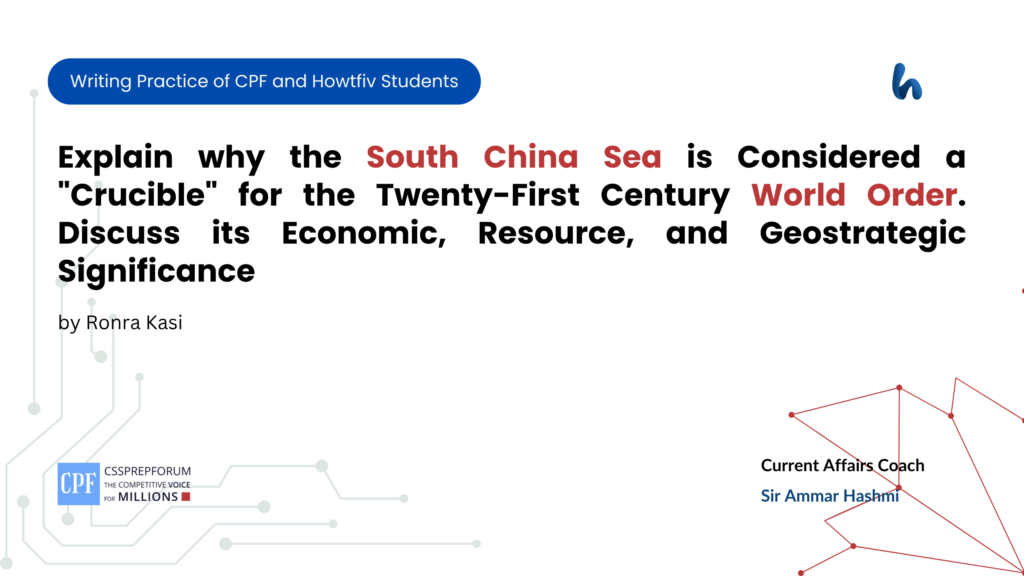
The following question of CSS Pakistan Affairs is solved by Ronra Kasi under the supervision of Howfiv’s Pakistan Affairs and Current Affairs Coaches: Miss Iqra Ali and Sir Ammar Hashmir. She learnt how to attempt 20 marks question and essay writing from Sir Syed Kazim Ali, Pakistan’s best CSS and PMS English essay and precis teacher with the highest success rate of his students. This solved question is attempted on the pattern taught by Sir to his students, scoring the highest marks in compulsory and optional subjects for years.

Outline
1- Introduction
2-A Bird’s Eye View on the Current State of the South China Sea
3- Why the South China Sea is Considered a “Crucible” for the Twenty-First Century World Order
- 3.1- The SCS Is the Central Battleground of US-China Rivalry
- Case in Point: U.S. congressional research states that the South China Sea has emerged as an arena of U.S.-China strategic competition. A 2026 review found intensified confrontation, with China expanding its coast guard deployments while the U.S. deepened its military engagement in the Philippines, including missile deployments.
- 3.2- The 2016 Ruling Exposed International Law’s Enforcement Gap
- Case in Point: The Permanent Court of Arbitration ruled that China’s historic rights claims were incompatible with UNCLOS and found that no Spratly feature was entitled to an exclusive economic zone; China rejected the ruling as “null and void,” thereby exposing UNCLOS’s lack of enforcement power.
- 3.3-The SCS Is an Irreplaceable Global Trade and Energy Route
- Case in Point: The EIA reports 18 million barrels per day of oil and 6.7 trillion cubic feet of LNG transited these waters in 2023, sustaining Asia’s energy security.
- 3.4-The SCS Tests New Gray-Zone and Nuclear Deterrence Strategies
- Case in Point: Analysts warn China’s calibrated “salami-slicing” tactics erode global maritime order without triggering open war, while its Hainan submarine base gives the navy
4-Dissecting the Significance of the South China Sea
- 4.1-Economic Significance of the South China Sea
- a- The SCS Carries Trillions in Global Trade Annually
- Case in Point: CSIS’s ChinaPower Project calculated that approximately $3.4 trillion in trade transited the South China Sea in 2016, roughly 21% of global trade.
- b-Energy Shipments Through the SCS Power Asia’s Economies
- Case in Point: The U.S. Energy Information Administration reports that in 2023, roughly 18 million barrels per day of crude oil, plus 6.7 trillion cubic feet of liquefied natural gas, transited the South China Sea, supplying China, Japan, and South Korea
- a- The SCS Carries Trillions in Global Trade Annually
- 4.2- Strategic and Resource Significance of the South China Sea
- a-SCS Fisheries Sustain Millions of Livelihoods
- Case in Point: CSIS’s Asia Maritime Transparency Initiative estimates that the South China Sea provides about 12% of the global fish catch, valued at nearly $21.8 billion, employing roughly 3.7 million people directly in these fisheries.
- b-Oil and Gas Reserve Estimates Remain Scientifically Contested
- Case in Point: The EIA’s 2024 brief cites that SCS has 3.6 billion barrels and 40.3 trillion cubic feet of oil and gas reserves.
- a-SCS Fisheries Sustain Millions of Livelihoods
- 4.3- Geostrategic Significance of the South China Sea
- a-China Seeks to Control the Malacca Strait Chokepoint
- Case in Point: Chinese strategists have long called this vulnerability the “Malacca Dilemma”: the fear that a rival power could blockade the Malacca Strait, choking China’s energy imports, since CSIS reports this single strait carried over $2.4 trillion in trade during 2024
- b-The SCS Shelters China’s Nuclear Submarine Fleet
- Case in Point: As per SIRPI, China bases nuclear-armed submarines at Hainan Island, using the South China Sea as a protected “bastion”; Carnegie Endowment analysis explains this gives the navy a second route to open Pacific waters
- a-China Seeks to Control the Malacca Strait Chokepoint
5- Conclusion
Answer to the Question
Introduction
The South China Sea has become the defining arena where twenty-first century power politics is tested and, at times, openly defied. To illustrate, Alfred Thayer Mahan’s Sea Power Theory held that command of the seas dictates command of trade, resources, and ultimately global primacy, a proposition this sea validates almost literally. Contingent upon this, trillions in trade, vast fisheries, and contested hydrocarbons all pass through waters now militarised by rival navies. All things considered, the South China Sea functions as a genuine crucible, where economic, resource, and geostrategic pressures converge to reshape the emerging world order.
A Bird’s Eye View on the Current State of the South China Sea
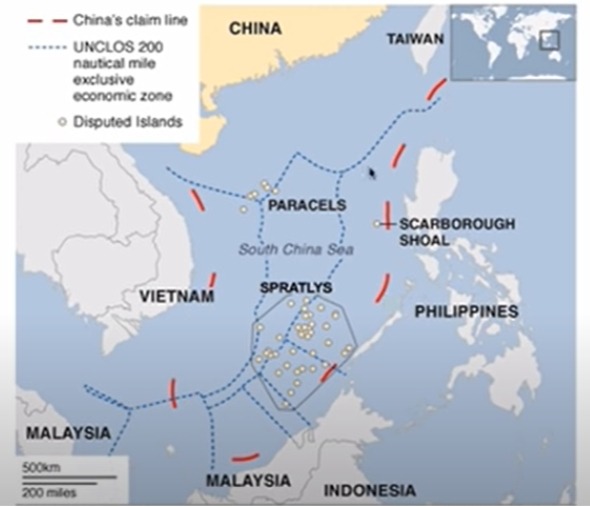
The South China Sea, at this juncture, remains one of the world’s most volatile flashpoints, far from resolution despite decades of diplomacy. Moreover, confrontations between Chinese and Philippine vessels near Second Thomas Shoal and Scarborough Shoal have grown sharper, with water-cannon incidents and armed boardings recorded through 2025 and 2026. Meanwhile, the ASEAN-China Code of Conduct negotiations, targeted for completion this year, remain stalled over questions of legal bindingness and geographic scope. This uneasy standoff, layered atop overlapping historical and legal claims, illustrates why the sea now commands disproportionate global attention relative to its modest size.
Why the South China Sea is Considered a “Crucible” for the Twenty-First Century World Order
- The SCS Is the Central Battleground of US-China Rivalry
To begin with, the South China Sea has become the main battleground of US-China rivalry, testing whether great powers can coexist without collision. As an illustration, U.S. congressional research shows the sea is now an arena of strategic competition, and a 2026 review recorded sharper confrontation as China expanded coast guard deployments while Washington deepened military ties with the Philippines, including missile deployments. Such calibrated moves reveal neither side will yield ground. Thus, the SCS serves as a live test of whether today’s order can absorb a rising challenger.
- The 2016 Ruling Exposed International Law’s Enforcement Gap
Furthermore, the 2016 arbitral ruling exposed a deep enforcement gap at the heart of international maritime law. Certainly, this gap becomes visible once the tribunal’s findings are set against Beijing’s actual response. For instance, the Permanent Court of Arbitration ruled China’s historic-rights claims incompatible with UNCLOS and found no Spratly feature entitled to an exclusive economic zone, yet China rejected the verdict outright as null and void. Accordingly, a legally binding ruling thus produced no binding behavioural change on the ground. This episode reveals that international law without enforcement power remains, in practice, an aspiration rather than a guarantee.
- The SCS Is an Irreplaceable Global Trade and Energy Route
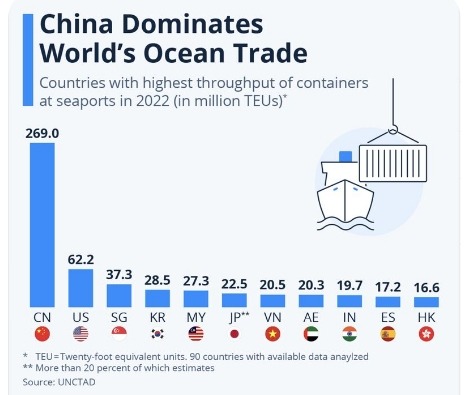
Adding to the above, the South China Sea is also an irreplaceable artery for global trade and energy security. Its importance is best captured not through description but through volume. To illustrate, the U.S. Energy Information Administration reports that in 2023 alone, roughly 18 million barrels of oil per day and 6.7 trillion cubic feet of liquefied natural gas transited these waters, sustaining much of Asia’s energy needs. For this very reason, no alternative route can absorb this volume without high cost and delay to importing economies. Consequently, any prolonged disruption here would ripple far beyond the region, straining global supply chains and energy markets.
- The SCS Tests New Gray-Zone and Nuclear Deterrence Strategies
Finally, the South China Sea has become a testing ground for new gray-zone and nuclear deterrence strategies. These tactics matter precisely because they are designed to avoid detection as acts of aggression. As an illustration, analysts warn that China’s calibrated “salami-slicing” approach erodes maritime order gradually, without ever triggering open war, while its Hainan submarine base extends a protected bastion for nuclear-armed vessels. Each incremental step is too small to justify retaliation, yet their cumulative effect steadily shifts the balance of control. Taken together, this slow-motion contest suggests that twenty-first century power struggles increasingly unfold below the threshold of war.
Dissecting the Significance of the South China Sea
A- Economic Significance
- The SCS Carries Trillions in Global Trade Annually
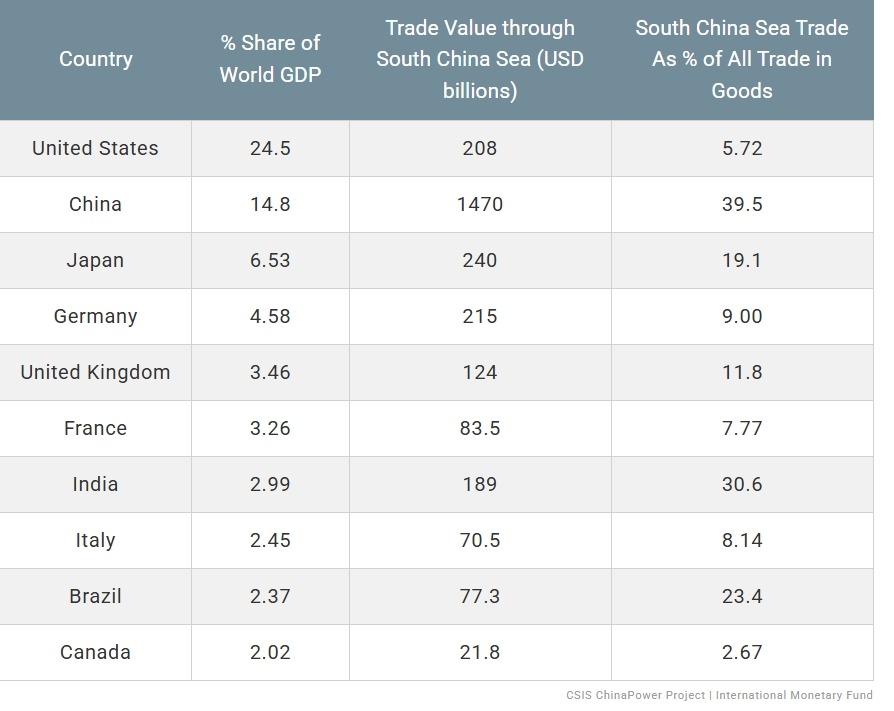
Economically, the South China Sea carries an extraordinary volume of global trade each year. This scale becomes clear once trade flows are actually measured rather than assumed. For instance, CSIS’s ChinaPower Project calculated that approximately $3.4 trillion in trade transited the sea in 2016, roughly 21 per cent of global trade that year alone. Such a figure means over a fifth of everything the world buys and sells depends on safe passage through these waters. Therefore, the sea’s economic weight gives every trading nation, not just its claimants, a direct stake in how this dispute unfolds.
- Energy Shipments Through the SCS Power Asia’s Economies
Beyond trade, the sea is equally vital as an energy corridor for the region. Oil and gas shipments passing through it directly shape the energy security of major Asian economies. In particular, the U.S. Energy Information Administration reports that in 2023, roughly 18 million barrels of crude oil daily, plus 6.7 trillion cubic feet of liquefied natural gas, transited these waters, supplying China, Japan, and South Korea. Even a small interruption to this flow would raise energy costs sharply across Northeast Asia. Thus, the sea’s energy role makes it strategically indispensable, not merely commercially useful.
B- Resource Significance
- SCS Fisheries Sustain Millions of Livelihoods
In no uncertain terms, the South China Sea’s resource wealth is equally central to regional livelihoods, particularly through its fisheries. These fisheries are not a marginal concern; they sustain food security across several coastal states. To illustrate, CSIS’s Asia Maritime Transparency Initiative estimates that the sea provides about 12 per cent of the global fish catch, valued at nearly $21.8 billion, employing roughly 3.7 million people directly. Millions more depend indirectly on this catch for protein and income across Southeast Asia. Against this backdrop, the scale of this dependence explains why fishing rights disputes routinely escalate into broader diplomatic and even naval confrontations.
- Oil and Gas Reserve Estimates Remain Scientifically Contested
Beneath these waters also lie hydrocarbon reserves whose true scale remains disputed among experts. This uncertainty itself fuels competing claims, since no single estimate commands consensus. For instance, the EIA’s 2013 estimate cited 11 billion barrels of oil and 190 trillion cubic feet of gas, while its revised 2024 brief lowered proved and probable reserves to 3.6 billion barrels and 40.3 trillion cubic feet. Chinese state estimates, by contrast, run many times higher than either figure. This wide variance shows resource competition here is driven as much by perception and ambition as by confirmed geological fact.
C- Geostrategic Significance
- China Seeks to Control the Malacca Strait Chokepoint
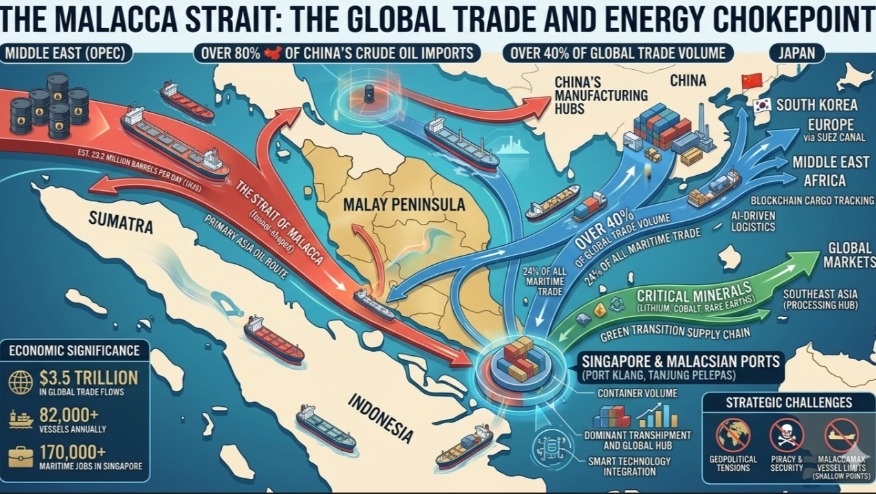
Geostrategically, China’s anxiety centres on its dependence on a single vulnerable chokepoint, the Malacca Strait. To be sure, this anxiety is not abstract; it shapes real naval strategy and infrastructure investment. As an illustration, Chinese strategists have long called this vulnerability the “Malacca Dilemma,” fearing a rival power could blockade the strait and choke China’s energy imports, since CSIS reports it carried over $2.4 trillion in trade during 2024. Without a shadow of doubt, losing access here would strangle a significant share of China’s energy and trade at the same time. To conclude, this single vulnerability explains much of China’s determination to assert control over the wider sea.
- The SCS Shelters China’s Nuclear Submarine Fleet
Compounding this further, the sea also shelters a far more sensitive strategic asset: China’s nuclear submarine fleet. This role elevates ordinary maritime disputes into matters of nuclear deterrence and survivability. As per SIPRI, China bases nuclear-armed submarines at Hainan Island, using the South China Sea as a protected “bastion,” and Carnegie Endowment analysis explains this gives the navy a second route into open Pacific waters. Strikingly, losing control of these waters could therefore expose part of China’s second-strike capability. In a word, this dimension shows why Beijing treats the dispute as inseparable from its core national security calculus.
Conclusion
What emerges from this analysis is that the South China Sea is far more than a regional territorial quarrel; it is a genuine crucible shaping the twenty-first century world order. Its economic weight, contested resources, and geostrategic value converge precisely where Mahan’s sea power thesis predicted power would ultimately be decided. Along with that, the unresolved 2016 ruling, entrenched great-power rivalry, and evolving gray-zone tactics all confirm that outcomes here will echo well beyond Southeast Asia. In other words, how claimants and great powers manage this convergence will signal whether rules-based order or raw power defines global politics in the decades ahead.
CSS Solved Past Papers’ Essays
Looking for the last ten years of CSS and PMS Solved Essays and want to know how Sir Kazim’s students write and score the highest marks in the essays’ papers? Then, click on the CSS Solved Essays to start reading them.
CSS Solved Essays
CSS Solved Islamiyat Past Papers
Want to read the last ten years’ Islamiyat Solved Past Papers to learn how to attempt them and to score high? Let’s click on the link below to read them all freely. All past papers have been solved by Pakistan’s top CSS Islamiyat coaches having the highest score of their students.
CSS Solved Islamiyat
CSS Solved General Science & Ability Past Papers
Want to read the last ten years’ General Science & Ability Solved Past Papers to learn how to attempt them and to score high? Let’s click on the link below to read them all freely. All past papers have been solved by Pakistan’s top CSS GSA coachez having the highest score of their students.
CSS Solved General Science & Ability
CSS Solved Pakistan Affairs Past Papers
Want to read the last fifteen years’ Pakistan Affairs Solved Past Papers to learn how to attempt them and to score high? Let’s click on the link below to read them all freely. All past papers have been solved by Pakistan’s top CSS Pakistan Affairs coaches having the highest score of their students.
CSS Solved Pakistan Affairs
CSS Solved Current Affairs Past Papers
Want to read the last fifteen years’ Current Affairs Solved Past Papers to learn how to attempt them and to score high? Let’s click on the link below to read them all freely. All past papers have been solved by Pakistan’s top CSS Current Affairs coaches having the highest score of their students.
CSS Solved Current Affairs